


Sale!
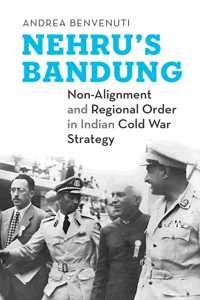

Nehru’s Bandung : Non-Alignment and Regional Order in Indian Cold War Strategy (Hardcover) | Released: 10-May-24
By: Andrea Benvenuti (Author) Publisher: Speaking Tiger30.00% Off Original price was: 750.00$.525.00$Current price is: 525.00$.
You save 225.00$
This book sheds light on a neglected aspect of Indias Cold War diplomacy, starting with the role of Indian Prime Minister Jawaharlal Nehru and his Congress government in organising the first Asian-African Conference in Bandung in April 1955. Andrea Benvenuti shows how, in the early Cold War, Nehru seized the... Read More
In stock
Ships within 1-2 Business Days

100% Orginal Books

Easy Replacement

Certified product

Secure Checkout

On time delivery
Author:

Andrea Benvenuti
Publisher Name:
Speaking Tiger
Language:
English
Binding:
(Hardcover)
About The Book
This book sheds light on a neglected aspect of Indias Cold War diplomacy, starting with the role of Indian Prime Minister Jawaharlal Nehru and his Congress government in organising the first Asian-African Conference in Bandung in April 1955. Andrea Benvenuti shows how, in the early Cold War, Nehru seized the opportunity accorded by the conference to transcend growing international tensions and pursue an alternative vision: a neutralised Asian area of peace, underpinned by a code of conduct based on the five principles of peaceful coexistence.
Relying on Indian, Western and Chinese archival sources, Nehrus Bandung focuses on the policy concerns and calculations, as well as the international factors, that drove a sceptical Nehru to support Indonesias diplomatic push for such a gathering. It reveals how, in Nehrus estimation, Bandung also served a further important purposesecuring Chinas commitment to peaceful coexistence, without which stability in Asia would be illusory.
Nehrus support for an Asian-African conference did not derive from an emotional commitment to Afro-Asian internationalism. Instead, it stemmed from a desire to promote a third way in an increasingly polarised world, and to forge a stable regional orderone that would enhance Indias external security and domestic prosperity.
This is an essential book for anyone interested in Independent Indias foreign policy, the history of the Non-Aligned Movement, and also the history of India-China relations.
Similar Products

Nbde Part II Lecture Notes
Original price was: 5,027.00$.2,765.00$Current price is: 2,765.00$. Add to cart
NCLEX-RN Content Review Guide
Original price was: 2,095.00$.1,152.00$Current price is: 1,152.00$. Add to cart
NCLEX-RN Premier 2015-2016 with 2 Practice Tests: Book + Online + DVD + Mobile
Original price was: 2,514.00$.1,383.00$Current price is: 1,383.00$. Add to cart
Security and Development
Original price was: 1,095.00$.821.00$Current price is: 821.00$. Add to cart
Reaching for The Sky – Empowering Girls Through Education
Original price was: 1,395.00$.1,046.00$Current price is: 1,046.00$. Add to cart
USMLE Step 2 CS Complex Cases
Original price was: 2,514.00$.1,383.00$Current price is: 1,383.00$. Add to cart
The Adulterer and Kama
Original price was: 499.00$.349.00$Current price is: 349.00$. Add to cart